Patient Beware
Frequently Asked Questions
Surely the internet is a safe marketplace?
The general public is very accustomed to buying online. And yes obtaining your prescription medicines online can be very safe. This website will help you identify an authentic pharmacy providing prescription medicines online.
This is necessary as there are 1000s of websites targeting the consumer. As you know the Internet has no borders so you need to double check the website you are planning to obtain your prescription medicine from. Illegal websites look slick and professional and disguise their true identity by falsifying pharmacy certificates or licences. Remember this simple rule; if the website selling a prescription medicine does not require a prescription it will be illegal.
Why do foreign websites sell to the EU?
The simple answer is only one word – MONEY! Europe is one of the largest trading areas in the world. Criminals take advantage of this to access this lucrative market. A patient buying medicines online should, perhaps, ask these questions. “If these people will break one law, how many more might they break? Will the medicine be real, will it work? What else am I risking apart from my health? Should I not just get my medicine from a trusted online pharmacist?
What are the real risks?
Firstly, your health. In addition, accessing criminal websites exposes you to the whole world of cybercrime. Your identity could be stolen and used in the execution of crime, like benefit fraud. Your banking and credit card details could be taken and used by the criminals. All of your personal information could be cloned and, not least, your computer could become infected with viruses and/or malware. Are these risks really worth taking?
Who are these people?
At any one time, 95% of online pharmacies advertising on the internet are bogus. They are not concerned with your health, just making money. Some pretend to be in Canada by displaying a Maple leaf but are, in fact, operated by international organised crime networks from “safe havens” where it is very hard for law enforcement to catch them.
Are fake medicines really dangerous?
Some people argue that, far from being dangerous, falsified medicines enable people to access medicine that they would not otherwise be able to, for example because of cost or availability. Those who make this argument assume two things. First, they assume that the fake is an exact copy of the real thing, that it has been produced in a hygienic manufacturing facility and has the correct ingredients. Second, they assume that it will not have any harmful ingredients.
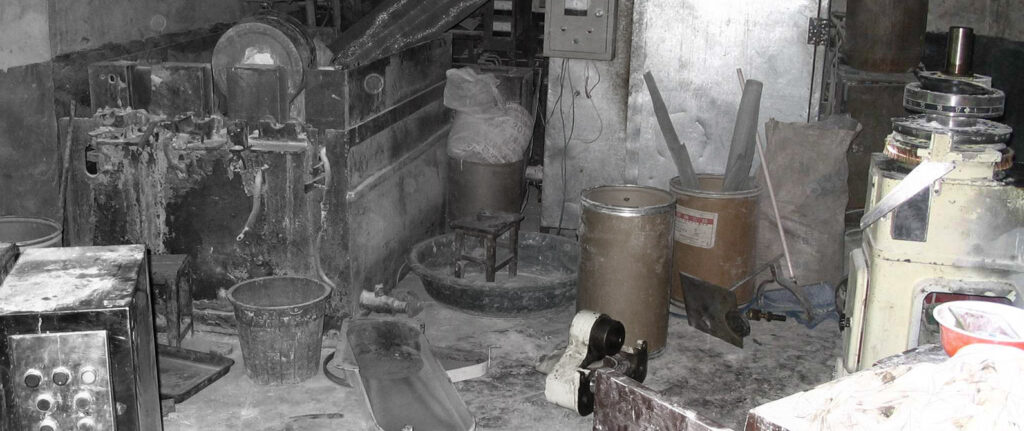
Fake medicines are not a cheap alternative to the real thing. They are, instead, a dangerous, global healthcare crime. There is a very good chance that a fake will have been produced in filthy conditions. It may contain too little, none or too much of the active ingredient, and may also contain other substances which could be harmful or, indeed, fatal. Heavy metals, boric acid, lead-based paint, floor polish – all these and more have been found in fake medicines.
Wouldn't I spot the difference?
People assume that a fake medicine will be easy to identify. They think that if the fake is produced in conditions like those pictured, it will obviously look like a cheap imitation. Many people think that the counterfeiter aims only to make a quick buck from a gullible buyer, who won’t spot that the medicine is fake until it is too late and the counterfeiter has moved on to his next victim. Would these same people believe that they would be able to tell a fake medicine from a genuine one? Why not take the test and see if you can tell which tablet is the genuine one and then, if you are really confident you’ve got it right, think how confident you’d be if your life depended on it.
The reality is that you would not be able to tell the difference. The counterfeiter is not here today and gone tomorrow. They are not trading on a street corner in a vacation resort. They are part of a highly sophisticated web of organised criminal network. The European Union Intellectual Property Office (EUIPO) and the Organisation for Economic Co-operation and Development (OECD) estimate that counterfeit pharmaceuticals generate more than $200 billion globally each year, with online sales accounting for a substantial proportion of this activity. The counterfeiter’s biggest pay-off comes when his product looks so much like the real thing, that it is indistinguishable. When that is achieved, he can infiltrate legitimate supply chains as well as distributing widely via the internet to unsuspecting patients. And the one which is fake? Well, does it really matter? Buy a fake medicine and you are not getting a cheap imitation, you are endangering your life, without even knowing it.
Falsified medicines are dangerous
Although often produced in filthy, unsafe conditions, they can look exactly like the real thing. But, importantly, they are NOT the real thing. Here are some common questions and answers.
One of these capsules contains a fake and potentially harmful medicine.
Can you tell the difference?
Simply no one can, unless you have it analysed in a lab. Be careful, a fake medicine can have no active substance, too little or too much or none at all. Or worse could be poisonous. There are at least 35,000 websites out there trying to sell you fake meds without a prescription to make lots of money. Don’t take the risk so before you buy or obtain your prescription medicine from an online pharmacy, check that it is on the pharmacy register.